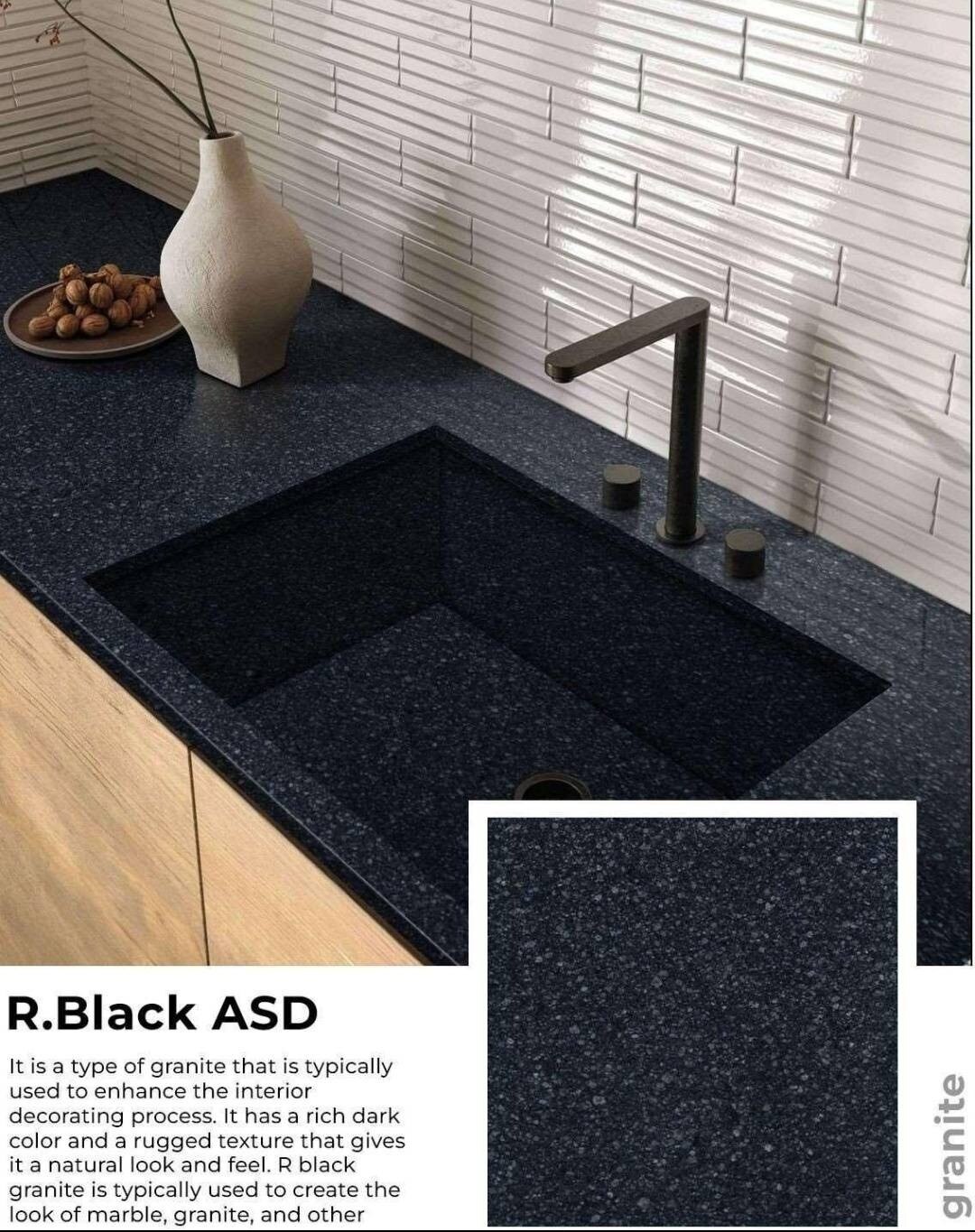
The right R Black ASD slab depends on more than how black it looks in a showroom. You will be able to match plain or blue-speckled stone to each room, assess how Pune light and monsoon moisture affect the choice, and approve slabs and fabrication details before paying for installation.
Key takeaways
- Choose a uniform pattern for minimalist rooms and busier movement for feature surfaces.
- Use light cabinetry to prevent black granite from making compact rooms feel heavy.
- Check slabs for shade, veins, cracks, edge damage and consistent finishing.
- Specify the finish and fabrication details according to each room’s use.
Choose the R Black ASD pattern that fits your interior
A plain, relatively uniform R Black ASD slab suits a minimalist or contemporary Pune interior because it gives kitchen counters and wall cladding a continuous, disciplined background. Pair it with white, beige or pale-grey cabinets when you want contrast; dark cabinetry and dark flooring can make a small room feel heavy.
R Black ASD granite options differ more in movement than in their base colour. Use the full-slab comparison below for your black ASD granite selection.
| Option | Visual language | Best fit |
|---|---|---|
| Plain R Black ASD | Uniform black field with restrained grain | Minimalist kitchens, modern vanities, long counters and clean wall panels |
| R Black Blue Dot | Black ground with visible blue mineral specks | Contemporary or transitional rooms needing detail against plain cabinets |
| More movement-filled black ASD | Strong grey, brown or irregular mineral pattern | Statement islands, staircase walls, fireplaces and feature panels rather than continuous worktops |
Treat blue speckling as a design feature, not a defect. It works best when the room already contains a related blue-grey accent; otherwise, the colour may compete with patterned flooring or veined backsplash tiles.
Approve the choice only after viewing a full slab. Wet a representative area and check it in the Pune home’s daylight and warm artificial light, because polishing, resin filling or moisture can reveal patchiness that a dry showroom face hides.
A polished finish gives the deepest black but highlights dust, fingerprints and water marks; approve a honed or leathered sample if you prefer a softer appearance.
Match the slab to each room and surface
Plain R Black ASD is the safest starting point for kitchen counters, bathroom vanities and window sills because its uniform grain keeps joins, edges and daily marks visually controlled. For black asd granite for homes, match the surface finish to the risk of water and slipping, not just the colour.
| Option | Best room or surface | Choose it when |
|---|---|---|
| Plain R Black ASD | Kitchen worktops, vanities, sills and calm wall cladding | You want a clean minimalist or traditional background |
| R Black Blue Dot | Kitchen islands, vanity tops and feature walls | Blue specks support a contemporary interior without dominating the room |
| Movement-filled black ASD | Staircase feature panels, fireplace surrounds and selected walls | You want visible character and can position each slab deliberately |
| Textured or flamed black ASD | Outdoor steps, balcony floors, porch thresholds and wet walking areas | Grip matters more than a reflective finish |
Use polished, relatively uniform slabs on worktops and vertical cladding; they wipe clean and keep a small kitchen from looking busy. Avoid highly movement-filled slabs across a long counter, where veins and shade changes can make the installation look broken.
For bathroom floors, exterior paths and monsoon-exposed steps, request a textured finish rather than polished stone. A continuous floor needs consistent thickness, calibration and shade, while a dramatic slab works better as a vanity backsplash, staircase landing or entrance feature.
Inspect the exact slab wet before approving it, because black stone can change from even to patchy after wetting or finishing.
Account for Pune light, dust, water and daily marks
A small room with limited daylight needs a lighter, calmer black surface; a large, bright room can carry stronger movement or blue speckling. The question, “Which R Black ASD granite suits a home in Pune?”, depends on how much visual contrast your cabinets, flooring and windows already create.
| Option | Room and interior condition | Better selection |
|---|---|---|
| Plain, uniform R Black ASD | Small kitchen, pale cabinets, or patterned flooring | A polished slab keeps the room visually orderly and reflects available light. |
| R Black Blue Dot | Large, bright room with white, beige or wood cabinets | Blue speckles add interest without competing with a busy floor. |
| Movement-filled black ASD | Feature wall, island face or statement panel | Use it as an accent; continuous worktops can look visually crowded. |
Dark cabinets and dark flooring make a black counter feel heavy, especially beside a narrow window. Pair them with a quieter grain, a honed or leathered finish, and lighter walls; choose polished stone when wiping oil and food residue quickly matters more than hiding fingerprints.
Pune dust, dried water and daily handling show sharply on glossy black. A honed or leathered surface softens those marks but can appear greyer, so approve the actual finish under daylight and warm indoor light.
For balconies, entrances and bathroom floors, monsoon water changes the decision: avoid high polish, compare measured slip performance, and choose a suitably textured finish only if it remains practical to clean. Wet a sample area before approval; uneven darkening exposes patchy polishing or absorption.
Inspect R Black ASD slabs before you approve them
Approve a full slab, not a 300 mm showroom sample. R Black ASD is a commercial stone name, not a universal technical grade, so request the quarry or source, recent test report, slab lot number, and the fabricator’s written finish description.
1. Compare the grain, background uniformity, grey or brown movement, blue or mineral flecks, and shade across the entire face. Compare slabs from the same lot, then view them beside other black ASD options.
2. Check nominal thickness against measured thickness at several points. Place a straightedge across the slab to find bowing, and confirm whether it has been calibrated; an uncalibrated slab can create uneven joints and variable countertop thickness.
3. Mark cracks, open fissures, chipped edges, pinholes, resin-filled areas, and resin touch-ups with removable labels. Reject structural cracks, unstable fissures, excessive filling, and edge damage that fabrication cannot safely remove.
4. Inspect the polish for swirls, dull patches, cloudy areas, and uneven reflection. Wet a representative section, then view it in daylight and under the Pune home’s warm artificial lighting; black stone can turn patchy or lighter after wetting.
5. Ask RK GRANITE to record every accepted variation and rejected defect on the purchase order before cutting. Test the exact slab with the intended cleaner, and prohibit hydrochloric-acid toilet cleaner, harsh descalers, and abrasive powders.
Related products
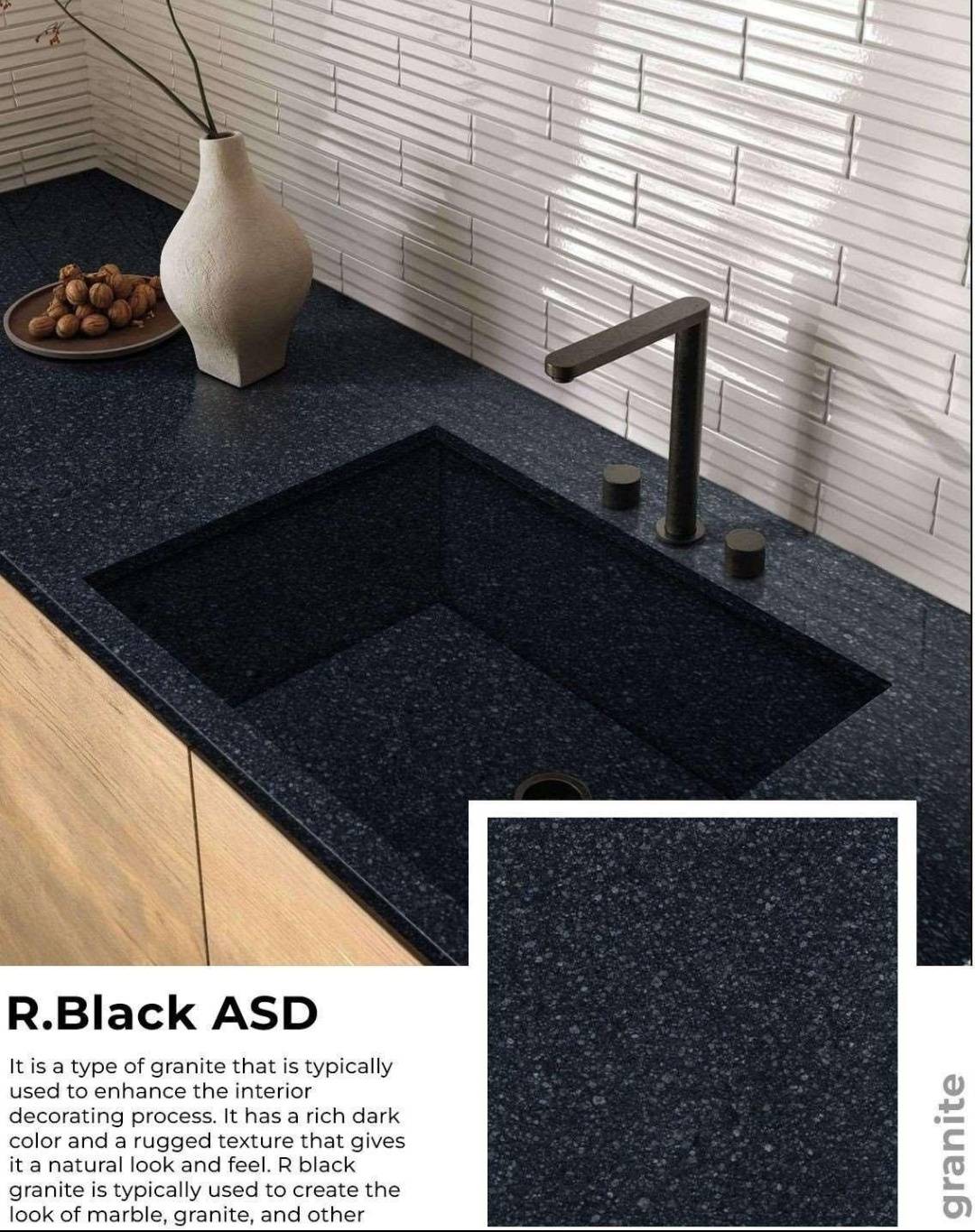 | Granite RK Granite presents premium R Black ASD Granite in Pune, a bold and elegant natural stone admired for its rich black base with uniform grains and... View product → |
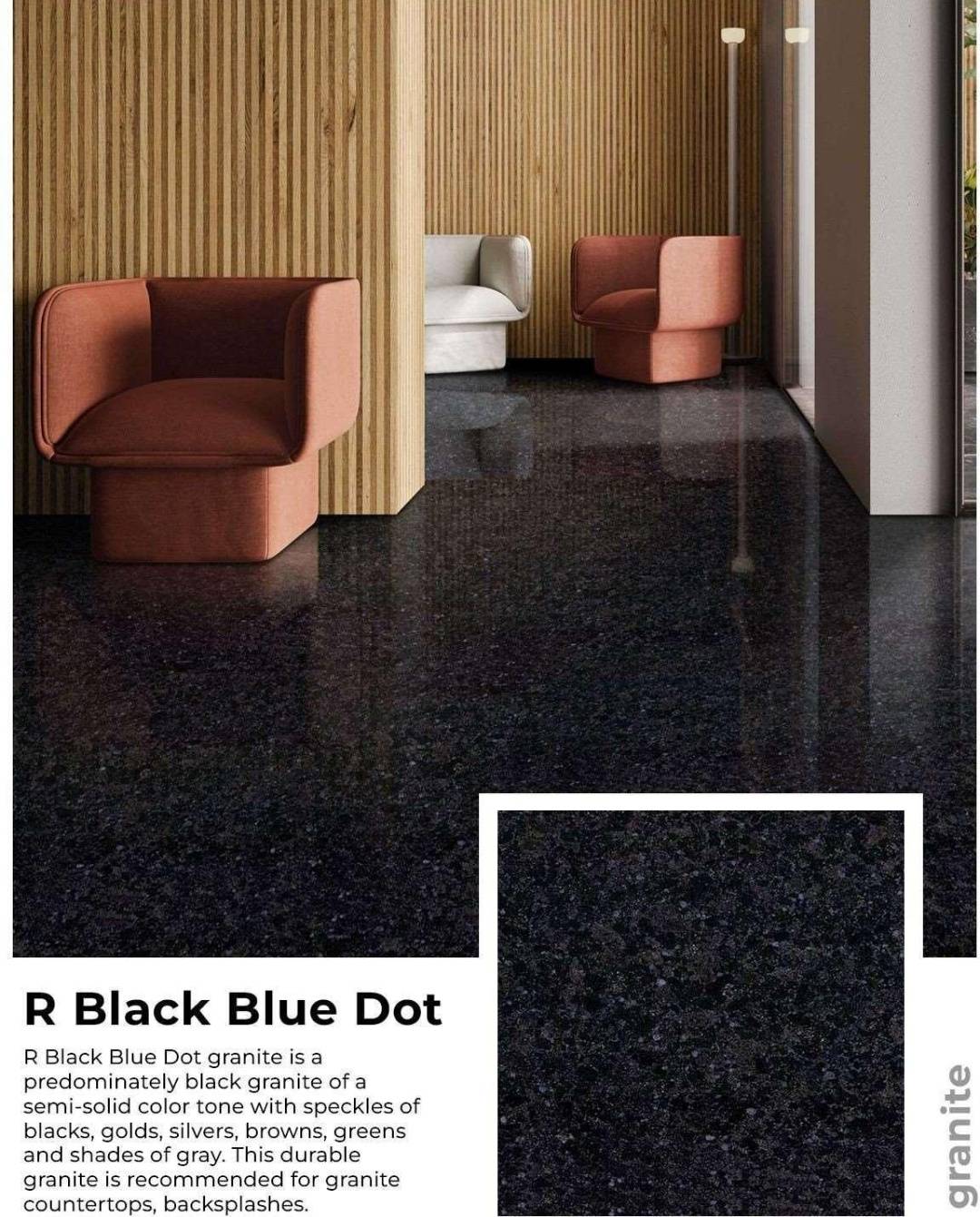 | Granite RK Granite offers premium R Black Blue Dot Granite in Pune, admired for its rich black background adorned with striking blue specks, giving interiors... View product → |
Specify the finish, fabrication and performance for each application
A polished surface can become slippery when wet, while excess sealer can leave a cloudy film on black stone. The right black asd granite selection therefore depends on finish, fabrication, drainage, exposure and cleaning—not showroom colour alone.
| Application | Specify | Performance and maintenance check |
|---|---|---|
| Kitchen counters | Polished, uniform slabs; calibrated thickness, supported overhangs and properly sealed cut-outs | Compare background, flecks, movement and resin-filled areas on full slabs; wipe spills promptly |
| Bathroom vanities and wet-area walls | Polished stone with sealed joints and accurately formed tap holes | Test absorption and staining on the actual slab; keep silicone joints intact |
| Wet floors, balconies and entrances | Flamed, brushed or suitably textured finish; falls toward drains | Compare measured slip performance; reject high polish where standing water is expected |
| Floors and stairs | Consistent thickness, flat substrate, movement joints and an easy-clean finish | Check abrasion and slip data; textured stone needs more frequent cleaning |
| Interior walls and feature panels | Mechanically secure large pieces; use polished slabs for easy dust removal | Reserve highly movement-filled slabs for feature areas rather than continuous counters |
A sealer does not make black asd granite for homes stain-proof or scratch-proof. Ask the fabricator to state the product, curing period and maintenance instructions; excess sealer is especially visible on polished black surfaces.
For exterior work, request data for the actual material or quarry source:
- Water absorption and density
- Compressive and flexural strength
- Abrasion or slip performance
- Fixing method and monsoon drainage detail
Use ASTM C615/C615M as a specification reference, then state project values and test methods in the purchase order. Mark acceptable defects before fabrication.
Frequently asked questions
Which R Black ASD granite pattern suits a minimalist Pune interior?
A plain, relatively uniform pattern creates a continuous background for minimalist or contemporary interiors. Pair it with white, beige or pale-grey cabinets for contrast.
How should you match R Black ASD granite to different rooms and surfaces?
Choose the slab, finish and fabrication according to the application, such as kitchen counters, wall cladding, bathroom surfaces or other high-use areas.
What should you inspect before approving R Black ASD granite slabs in Pune?
Compare slabs for colour and pattern consistency, then check the face, edges and corners for cracks, chips, blemishes and finishing defects.
Keywords