The first cleaning after installation sets the standard for the stone’s appearance, but rushing it can disturb grout, spread cement residue, or trap moisture beneath the slab. You will learn how to build a Pune-specific cleaning routine, remove common stains safely, test the sealer, and identify damage that needs professional assessment.
Key takeaways
- Wait for adhesive, grout, and sealant cure times before washing.
- Blot spills quickly; use pH-neutral cleaner and avoid abrasive powders.
- Increase dust and hard-water cleaning during Pune’s dry and monsoon seasons.
- Test absorbency before sealing, and identify loose or cracked stone before repairs.
What to do during the first 72 hours after installation
Do not wash newly installed Alaska Gold granite on an automatic 72-hour schedule. Alaska Gold granite care after installation begins only after the installer confirms that the tile adhesive, mortar, grout, and joint sealant have cured according to their product data sheets.
Cure time depends on slab thickness, ventilation, humidity, and site conditions. Premature washing can loosen fresh joints, spread cement residue, or trap moisture beneath slabs.
1. During the first 24 hours, keep the surface free from traffic, standing water, tools, cardboard, and dust-producing work. Cover nearby metal and protect exposed edges while other trades work.
2. After the installer authorises cleaning, remove loose construction dust with a soft microfiber cloth, dust mop, or vacuum fitted with a soft attachment. Use clean water or a pH-neutral stone cleaner for the first wash, then rinse with clean water and dry the granite.
3. During the first week, inspect joints, corners, backsplash transitions, and any visible slab movement before allowing normal use. Report open joints, shifting edges, or damp areas before they become harder to correct.
Cement residue and grout haze require a remover labelled safe for the specific granite and finish. Test it on an inconspicuous area or offcut, protect adjacent grout and metal, and rinse thoroughly; do not improvise with acid.
This controlled start supports Alaska Gold granite maintenance in Pune, where humidity, dust, and hard water can prolong drying.
How to clean daily spills, grout haze, and kitchen stains safely
Remove solids from Alaska Gold granite immediately, then blot liquid instead of spreading it. Dilute a pH-neutral stone cleaner according to its label, wipe with a soft microfiber cloth or non-abrasive mop, rinse with clean water, and dry the surface rather than letting dirty water air-dry.
- Use mild dish soap sparingly when necessary, then rinse thoroughly; soap residue leaves a dull film.
- For oil, turmeric, tea, coffee, and food marks, clean promptly and repeat the neutral-cleaner process. Do not scrub harder.
- For cement or grout haze, choose only a remover explicitly labelled safe for the installed granite and its finish. Test it on an inconspicuous area or offcut, protect surrounding grout and metal, and rinse completely.
| Residue or finish | Correct response | Do not use |
|---|---|---|
| Daily spills | Neutral cleaner, soft cloth, rinse, and dry | Abrasive powders or steel wool |
| Cement or grout haze | Finish-safe remover, test, protect adjacent materials, rinse | Hydrochloric-acid toilet cleaner, bathroom descaler, vinegar, lemon, sulfamic-acid grout remover, or acidic cleaners |
| Kitchen stains | Repeat neutral cleaning promptly | Bleach mixtures or aggressive scrubbing |
| Pale rough or dull mark | Check for etching or residue before treating | Assume it is a stain or add sealer |
Persistent colour can be a stain. A pale rough or dull area can be etching or dried residue, and extra cleaning will not repair chemical damage.
Polished, honed, leathered, and textured finishes respond differently. Identify the finish before selecting a remover; this is essential Alaska Gold granite upkeep and belongs in any Alaska Gold granite cleaning guide.
How Pune’s monsoon, dust, and hard water change the upkeep routine
For how to care for Alaska Gold granite in Pune, remove grit before adding water. Dust-mop or vacuum floors weekly, then use diluted pH-neutral cleaner, clean water, and a low-abrasion pad where appropriate.
1. Change mop water when it becomes dirty. Repeatedly spreading muddy water leaves an abrasive film that creates dull traffic scratches, especially in offices, shops, entrances, and homes.
2. During monsoon months, inspect outdoor and semi-outdoor areas. Confirm that surfaces have positive drainage, outlets remain open, and joints do not hold water against the granite. Do not seal a wet substrate or block drainage; trapped moisture can damage joints and encourage staining or biological growth.
3. Dry granite around sinks, shower thresholds, and entry floors after washing. Pune’s hard water can leave a white mineral film as droplets evaporate.
4. Wipe oil and turmeric from counters immediately. Do not leave wet steel cans, soap bottles, flowerpots, or rubber-backed mats in place, because concealed moisture can stain the surface or leave rust marks.
5. Place mats inside and outside commercial doors. Use cutting boards, trivets, and felt pads under movable objects; grit causes surface dulling, while an impact can chip an edge even when the main slab remains intact.
Alaska Gold granite upkeep also needs a monthly inspection, not calendar cleaning alone. Check joints, corners, drains, stains, and concealed moisture, then address movement or standing water before it spreads.
How to decide whether the granite needs sealing
Reseal only when the installed surface shows a need, not because a calendar date has arrived. A penetrating sealer slows liquid absorption; it does not make Alaska Gold granite stain-proof. On a kitchen counter, confirm that the named product is suitable for food-contact areas.
Clean and dry the actual surface before testing. Place several drops of water on a representative area, leave them for roughly 10 to 15 minutes, and compare any darkened or absorbed area with a dry control. This is a field indication, not a laboratory measurement.
| Observation | What it indicates | Action |
|---|---|---|
| Water remains beaded with little darkening | Slower absorption at that location | Follow the product record; do not reseal automatically |
| A darkened area appears | Liquid entered the stone during the test | Ask for the sealer record before approving another coat |
| Cloudy or sticky film appears | Excess sealer dried on the surface | Have the installer assess and remove the residue safely |
Record the finish, test location, installer’s sealer name, and application date. Follow that manufacturer’s label and the installer’s record for preparation, coverage, recoat timing, ventilation, curing, and the period water must stay off the surface. Porosity, traffic, cleaning, and the product determine resealing frequency.
Do not use a colour-enhancing sealer to create shine or apply wax to polished granite. For Alaska Gold granite care after installation and Alaska Gold granite maintenance in Pune, ask RK GRANITE or the installer for the slab finish, food-safe documentation, sealer name, and after-installation care record before treatment.
Related product
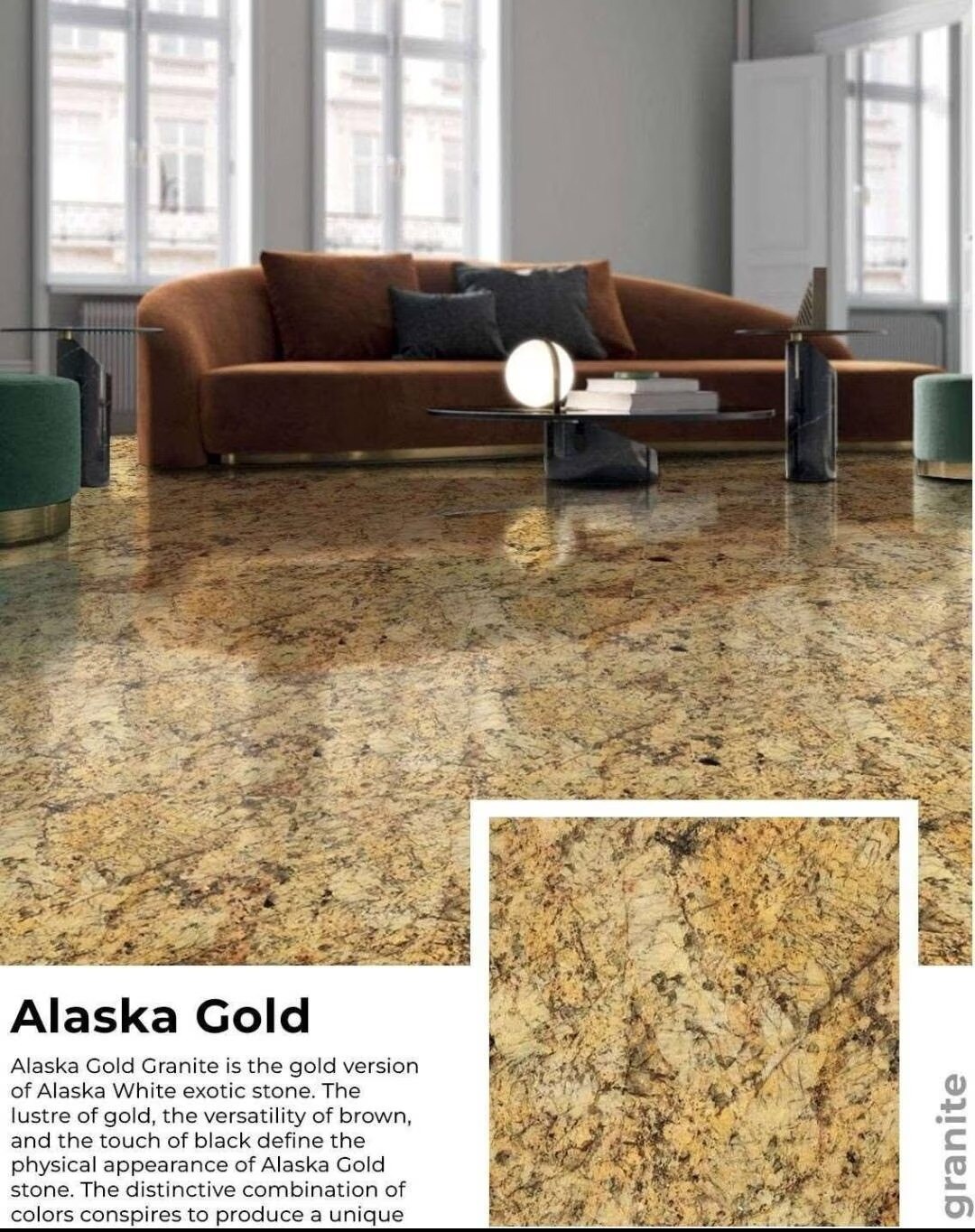
 | Granite RK Granite presents Alaska Gold Granite in Pune, a stunning natural stone admired for its golden and beige tones with elegant black and brown... View product → |
How to identify damage before attempting a repair
A dull patch is evidence, not a diagnosis. Residue, hard-water scale, etching, abrasion, and sealer problems need different treatments, so do not scrub harder or apply household polish.
1. Stain: Colour that remains after surface cleaning is a stain. Blot spills promptly and clean with a pH-neutral stone cleaner, soft cloth, clean water, and drying. If the colour persists, contact a stone professional.
2. Etch: A pale, rough, or changed-sheen area after vinegar, lemon, toilet cleaner, descaler, or another acid is chemical damage. Sealer will not restore the polish; a qualified restoration contractor must assess refinishing.
3. Scratch or traffic dulling: Grit or dragged objects can abrade polished granite. Stop the source, use entrance mats and felt pads, and have a qualified fabricator or restoration contractor assess whether polishing is needed.
4. Dull residue: Dried cleaner or hard-water scale can look like sealer failure. Follow the Alaska Gold granite cleaning guide: inspect, clean with a pH-neutral product, rinse, and dry before diagnosing the surface.
5. Sealer problem: A cloudy or sticky film indicates excess or poorly cured sealer. Rapid darkening during a 10–15-minute water-drop test indicates limited protection, not proof that resealing is appropriate. Do not reseal over unknown residue.
Escalate edge chips, resin-filled fissures, movement cracks, widespread dulling, suspected moisture below slabs, and failed joints. Keep photographs and installer product records for diagnosis and future Alaska Gold granite care after installation.
Frequently asked questions
How long should you wait before cleaning newly installed Alaska Gold granite?
Do not follow an automatic 72-hour schedule. Ask the installer to confirm that the tile adhesive, mortar, grout, and joint sealant have cured according to their product data sheets before washing.
How should you remove grout haze and kitchen stains from Alaska Gold granite?
Remove everyday spills by blotting, then use a pH-neutral stone cleaner and a soft cloth. Avoid abrasive powders, acidic cleaners, and harsh scrubbing; use a granite-safe grout-haze remover only after confirming compatibility.
How does Pune’s weather affect Alaska Gold granite maintenance?
Monsoon moisture calls for prompt drying and attention to damp joints, while dry-season dust requires more frequent dust removal. Hard water can leave mineral deposits, so dry the surface after cleaning and treat deposits with a granite-safe product.
How can you tell whether Alaska Gold granite needs sealing?
Place a few drops of water on a clean, dry area and observe whether the stone darkens. If it absorbs water and remains dark after drying, ask the installer or stone professional to assess sealing; do not seal over residue, moisture, or damage.
What should you check before repairing damaged Alaska Gold granite?
Inspect for cracks, chips, hollow-sounding tiles, loose edges, open joints, stains beneath the surface, and moisture around the installation. Photograph the damage and identify its cause before filling, polishing, or replacing the stone.
Keywords