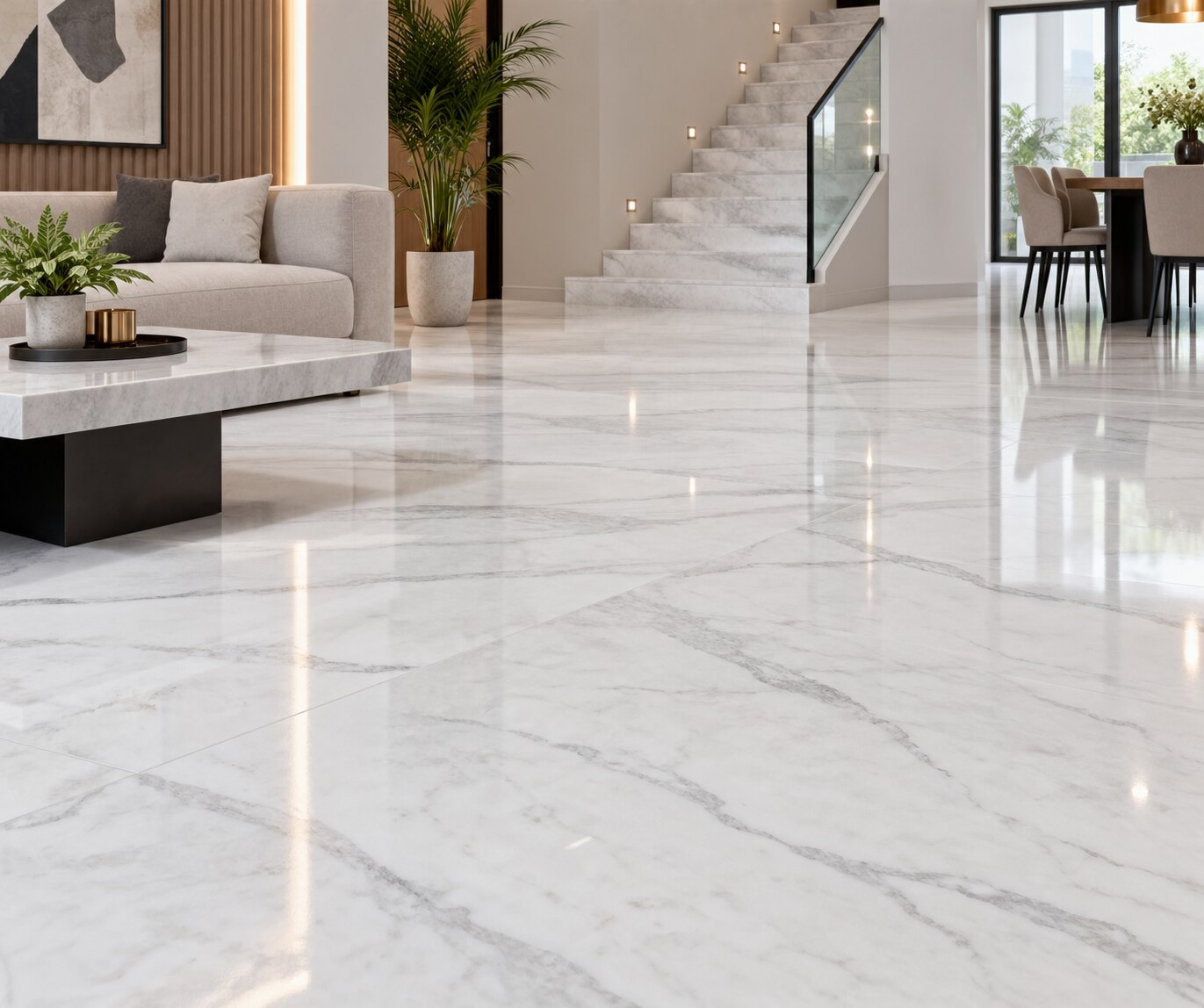
A commercial marble selection has to survive traffic, cleaning chemicals, moisture, fabrication and replacement decisions—not just look attractive in a showroom. By the end, you will know where Aspur Marble fits, how to approve and reserve slabs, which technical checks matter, and how to compare suppliers before placing an order.
Key takeaways
- Use Aspur marble for controlled interiors, not high-abrasion or slip-prone areas.
- Inspect full slabs in person and reserve matched material before issuing the purchase order.
- Compare finish, thickness, wastage, installation method and replacement stock—not just slab price.
- Require written details for batch, quantity, dimensions, delivery and breakage responsibility.
Where Aspur Marble Works—and Where It Creates Risk
Aspur Marble suits reception counters, hotel lobbies, lift surrounds, vanity tops, conference-room interiors and feature walls where veining is part of the design and maintenance is controlled. It becomes a risk on high-footfall floors, wet entrances, food-service counters and exposed terraces because abrasion, staining, impact and slipping can quickly damage a polished surface.
| Material | Best commercial use | Choose it instead of Aspur Marble when |
|---|---|---|
| Aspur Marble | Interior counters, wall cladding, lobbies and decorative flooring | You can control acidic cleaners, grit, spills and slip exposure |
| Granite | Busy floors, stair treads, service counters and exterior steps | You need higher abrasion and impact resistance |
| Porcelain slab | Washrooms, retail floors, wet zones and outdoor areas | Low absorption, consistent production and easy cleaning matter more than natural veining |
| Engineered quartz | Indoor reception and vanity counters with predictable colour | You need uniformity, but avoid direct sun or high heat unless the manufacturer approves it |
| Quartzite or another dense stone | Premium counters and exposed areas | You need natural stone with greater hardness and weather resistance |
Do not treat “aspur marble suppliers for commercial projects in Pune” as a performance specification. Require representative-lot results for water absorption, density, flexural strength, compressive strength and abrasion resistance. For façades, terraces or external steps, assess rain, thermal movement, anchoring, edge durability and finish separately; an interior polished sample proves none of these.
Acidic descalers, vinegar, lemon cleaners and some grout products etch calcitic marble. Specify a neutral-stone cleaner and reject polished marble for wet floors unless slip performance and maintenance controls are proven.
How Much Slab Variation Should You Expect on a Large Project?
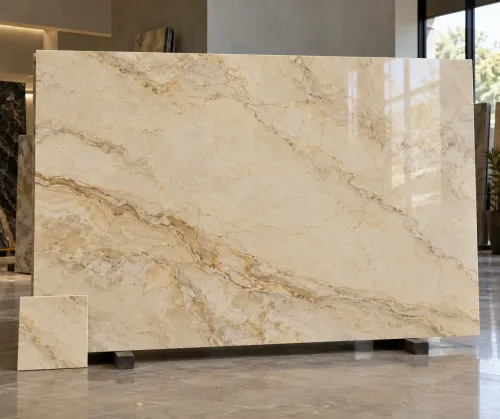
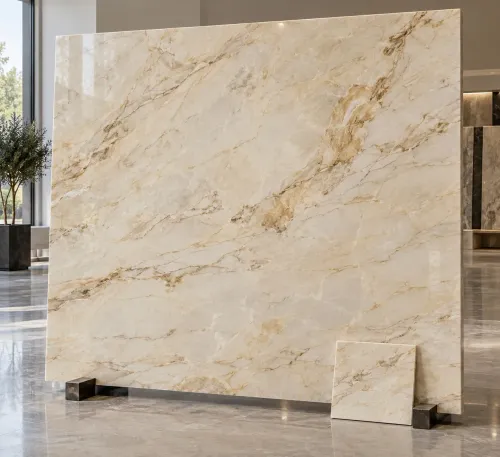
Approve Aspur Marble only after comparing full-size slabs from the proposed production lot. A small polished sample cannot show block-level changes in creamy background colour, vein density or direction, and “Aspur” is a market name rather than a controlled stone grade.
1. Request the quarry or processing source, lot number and block reference for the Aspur marble slabs in Pune. Lay representative slabs together under the project’s actual lighting, then compare background tone, grey-vein intensity, resin-filled areas and open areas.
2. Arrange the slabs in the sequence planned for the floor, wall or counter. Check whether veins create an acceptable flow across joints; a visually attractive single slab can produce an uneven, patchy installation when repeated.
3. Approve a large sample panel, not a tile. Show the actual finish, grout colour, joint width, edge treatment, sealer and lighting conditions, because each changes the perceived colour and contrast.
4. Put measurable limits in the purchase order: approved colour range, maximum resin-filled area, permitted open veins, cracks and pinholes, plus thickness, surface finish, edge finish and allowable shade variation.
5. Reserve the complete quantity from one production lot, with an agreed replacement allowance. Keep a signed reference slab or high-resolution record; replacement material bought months later can differ noticeably in shade and vein direction. For flooring and heavily used counters, link approval to water absorption, density, strength and abrasion results from that representative lot.
How to Inspect, Reserve and Calculate Aspur Marble Slabs
Inspect every slab before cutting: transport damage, fissures and inconsistent thickness become harder to prove once the stone is fabricated or installed. Photograph the sealed crates, labels and visible damage before opening them.
- Count the slabs against the delivery note and record each slab’s length, width and identification number.
- Examine both faces and all four edges under strong, even light. Mark open veins, cracks, resin-filled fissures, pinholes, chipped corners, edge bruising and shade differences.
- Measure thickness at several points, then check calibration, flatness and corner squareness. A thin or uneven slab can telegraph substrate irregularities and create lippage.
- Keep photographs and a damage register for every rejected or questionable slab. Do not cut it until the supplier accepts the record in writing.
- Match the approved slabs to the same block or production lot. If you plan to buy aspur marble in pune for a uniform lobby, floor or counter, reserve the complete requirement from that lot, including an agreed replacement allowance.
Use a slab layout or digital nesting plan before finalising quantity. Calculate usable area after trimming, cracks, edge damage, cut-outs, vein matching and the required grain direction; nominal slab area is not yield. Reserve enough material for the approved layout, plus documented replacements for transport breakage and future repairs.
Request representative-lot results for water absorption, flexural strength and abrasion resistance when the slabs will serve commercial floors or heavily used counters.
Choosing the Finish, Thickness and Installation System
Choose the finish by traffic, lighting, cleaning and wet-slip performance—not by sample appearance alone.
| Finish | Glare and wear | Staining and cleaning | Slip risk |
|---|---|---|---|
| Polished | Reflects strong lighting and makes etching, scratches and traffic-path dulling visible | Smooth surface cleans easily, but acids still etch it; sealers do not make it acid-proof | Can become hazardous when wet; require a documented wet-slip result |
| Honed | Reduces glare and disguises light scratching | Shows oil marks and dirt sooner; plan more frequent cleaning and resealing | Usually provides more texture, but confirm performance through the specified test |
| Leathered | Low sheen hides minor wear and gives tactile variation | Texture can retain dust, grease and detergent; use soft brushes and approved cleaners | Texture does not guarantee safety; obtain the project’s wet-pendulum or ANSI A326.3 DCOF result |
Write these fabrication and installation requirements into the drawings:
- State the nominated slab thickness, calibration tolerance and flatness tolerance. Check thickness at several points on delivery, including corners; thin or uneven slabs transfer substrate defects and create lippage.
- Specify eased or arrised exposed edges, protected corners, cut-out radii and reinforcement around sink, hob and service openings. Dry-lay veined pieces before fixing.
- Use an adhesive approved for natural stone and resin-backed slabs. Prepare a flat, dry substrate, control bed thickness, and approve a site mock-up; excess adhesive or uneven coverage can cause hollow spots, darkening or bond failure.
- Name the sealer, service area, curing period, maintenance interval and chemical compatibility with the adhesive, grout and cleaning products.
How to Compare Aspur Marble Dealers Before Signing the Purchase Order
Before signing with Aspur marble dealers in Pune, require comparable evidence, not a brochure description. “Aspur marble” identifies a market name associated with the Aspur/Dungarpur area, not a controlled performance grade. Ask for the quarry or processing source, block and lot numbers, a retained reference slab, and a representative-lot test report.
Require these documents and controls in writing:
- State the approved colour range, maximum resin-filled area, open veins, cracks, pinholes, thickness tolerance, surface finish, edge finish and allowable shade variation in the purchase order.
- Request water absorption, bulk density, flexural strength, compressive strength and abrasion-resistance results from the offered lot. Set acceptance limits for the actual use; do not copy generic catalogue figures.
- Approve a full-size panel showing the specified finish, grout colour, joint width, edge treatment, sealer and installed lighting. A small polished tile can hide block-level variation.
- Reserve the complete requirement and an agreed replacement allowance from one production lot when visual continuity matters.
| Checkpoint | Accept only when | Reject or hold when |
|---|---|---|
| Source | Quarry or processor, block and lot are identified | The dealer supplies only “Aspur” as origin |
| Quality | Results match the PO’s stated limits | Reports are generic or from another lot |
| Delivery | Count, thickness, finish, shade and damage are checked before unloading | Cracks, wet packaging, mixed lots or unrecorded breakage appear |
Aspur marble suppliers for commercial projects in Pune, including RK GRANITE, should be compared against this same document set. Photograph every slab, record shortages on the delivery note, and quarantine disputed pieces before fabrication.
Related product
 | Marble RK Granite presents premium Aspur Marble in Pune, admired for its creamy white base with subtle grey veins that add elegance and a luxurious touch to... View product → |
Frequently asked questions
Where does Aspur Marble work well in commercial projects?
It suits reception counters, hotel lobbies, lift surrounds, vanity tops, conference rooms and feature walls where veining is part of the design and maintenance is controlled.
Where can Aspur Marble create risk?
High-footfall floors, wet entrances, food-service counters and exposed terraces expose polished marble to abrasion, staining, impact and slipping risks.
How should you inspect Aspur Marble slabs for a large project?
Inspect the full slabs for colour, veining, thickness, cracks, repairs and edge damage, then reserve matched material and calculate usable area after cutting and wastage.
Which finish, thickness and installation details should you compare?
Compare the finish against traffic and moisture, confirm thickness with the fabricator, and match the adhesive, substrate preparation, joint layout and fixing method to the application.
How do you compare Aspur Marble dealers in Pune?
Compare slab selection, documented dimensions, batch continuity, inspection access, delivery protection, breakage responsibility, replacement availability and written purchase-order terms.
Keywords