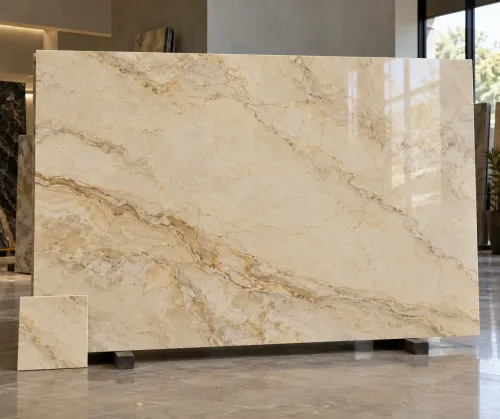
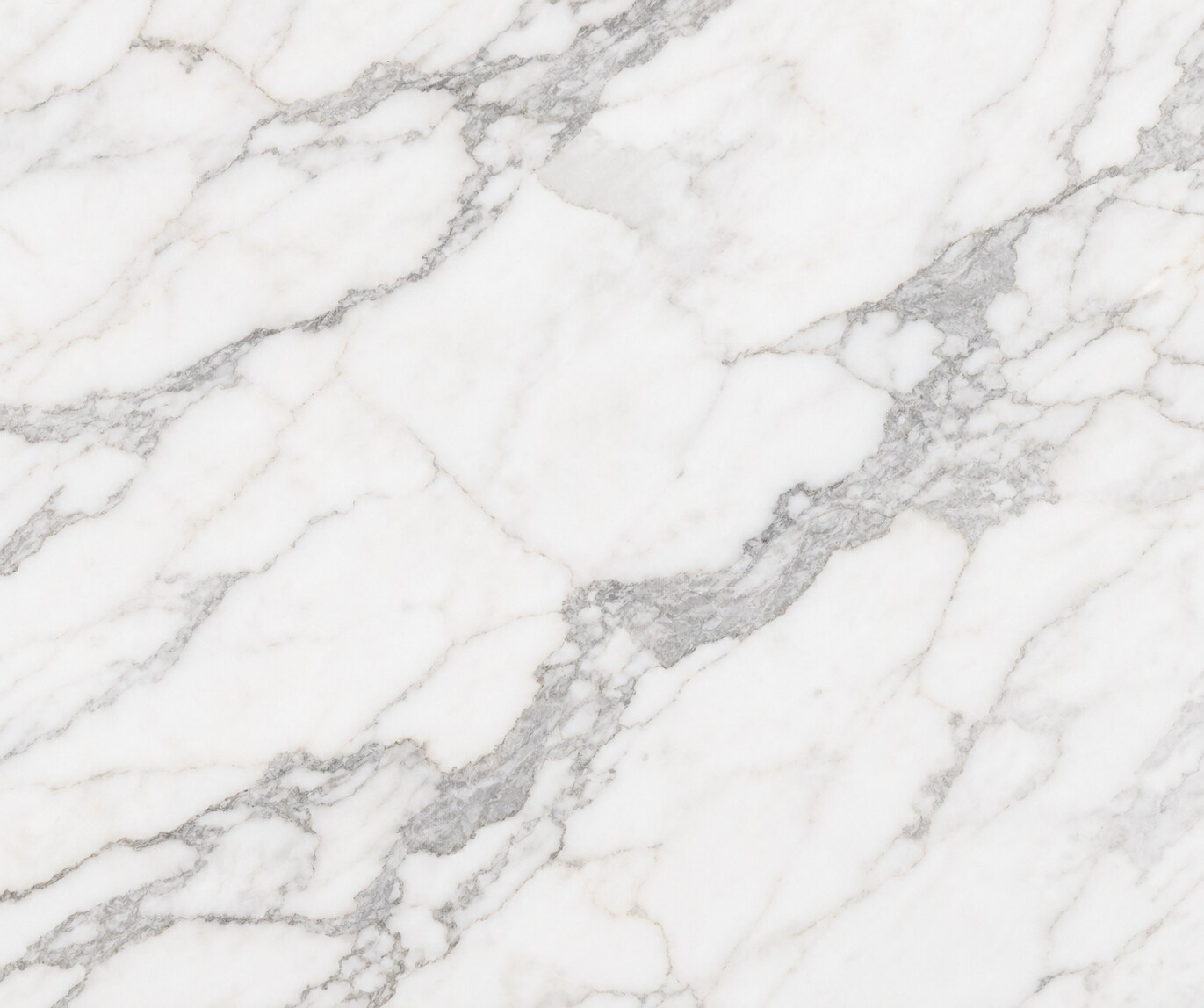
The name Albeta does not by itself tell you the stone’s origin, grade, absorption, repair history or fabrication performance. By checking the actual lot, documenting visible and hidden defects, and tying the purchase to Pune’s moisture, dust and hard-water conditions, you can reject risky slabs before they become an installation or replacement cost.
Key takeaways
- Treat Albeta as a showroom name, not a guaranteed technical grade.
- Reject slabs with structural cracks, unstable repairs or severe edge damage.
- Inspect dry and wet surfaces under direct light before approving slabs.
- Record slab numbers, defects and agreed replacements on the delivery document.
What Does Albeta Marble Actually Identify?
“Albeta” identifies a commercial showroom name, not a universal petrographic grade. It may describe a colour family, quarry product, imported stone, or material sold under different grades. Two slabs sold as Albeta can therefore differ in origin, background colour, absorption, strength, veining and repair requirements.
Many albeta marble problems in Pune begin when this trade name is treated as a technical specification.
| What to establish | Why it matters |
|---|---|
| Exact stone variety and quarry or country of origin | Confirms what stone you are actually comparing |
| Slab lot or crate number | Prevents unrecorded mixing of visually different production lots |
| Finish and nominal thickness | Affects appearance, wear, cutting and installation |
| Natural marble, composite marble or engineered slab | These materials have different composition, performance and repair methods |
| Test report for the supplied stone or an equivalent lot | Provides evidence beyond “premium” or “durable” |
A polished showroom sample cannot approve the production lot. Compare actual slabs from the same lot for background shade, vein direction, fissures, resin-filled areas, mesh backing, thickness and finish under the project’s lighting; natural variation is not automatically a defect.
For an albeta marble quality check, request ASTM C97 results for water absorption, bulk specific gravity and apparent porosity. Absorption is especially important because a high figure raises darkening, staining and moisture-related installation risks. Record the lot-to-lot differences before approving a layout, rather than assuming one attractive sample represents every slab.
Which Albeta Marble Defects Should You Reject or Record?
Reject any feature that threatens a cut-out, corner, edge or narrow unsupported strip; record everything else on the approved slab layout as acceptable, repairable or rejectable. A polished face can hide weakness, so complete the Albeta marble quality check on the face, edges and underside.
| Feature | Inspection clue | Decision |
|---|---|---|
| Resin-filled fissures or filled cavities | Glossy, dark or differently coloured repair; filling may sit above the stone | Record; reject if open, loose or near a cut-out |
| Open veins or hairline cracks | Natural veins follow the pattern and stay closed; cracks continue through the slab or change after wetting | Reject near sinks, hobs, corners or unsupported strips |
| Mineral spots, colour patches or pinholes | Natural variation remains within the body; patches, holes or epoxy repairs look isolated | Record against the approved layout |
| Edge chips or repaired breaks | Missing stone, glue line or altered polish appears at an edge or corner | Reject where fabrication or handling will enlarge it |
| Mesh backing | Fabric covers the underside or conceals resin and damaged stone | Record and obtain the fabricator’s preparation method |
| Surface scratches | Scratch interrupts polish but does not continue into the body | Repairable if shallow; reject if it exposes weakness |
| Warped slabs or uneven thickness | Straightedge reveals bowing or twist; measurements vary across the slab | Reject for large panels, stairs or narrow pieces |
Do not approve by appearance alone. Compare production slabs from the same lot, and request ASTM C880 flexural-strength data for large panels, stairs, cantilevers and narrow pieces. Mark every defect before nesting the layout.
How to Perform an Albeta Marble Quality Check at the Pune Yard
A showroom sample cannot approve a production lot. At the Pune yard, record the quotation, packing list, and slab or crate numbers before inspection; traceability prevents albeta marble buying issues after fabrication.
1. Match every slab number, quantity, nominal thickness, finish, and lot against the quotation and packing list. Photograph the markings before unloading.
2. View each polished face under direct light, then angled light. Compare slabs from the same lot for background shade, vein direction, polish consistency, fissures, resin-filled areas, and bookmatching potential.
3. Inspect the underside for mesh, resin, dampness, repaired breaks, and delamination. Mesh or resin can hide weakness and complicate cutting, edge polishing, or adhesive bonding.
4. Examine every edge and corner for chips, impact marks, open cracks, and repaired areas. Mark defects near sink cut-outs, hob openings, corners, and narrow unsupported strips.
5. Measure thickness at several points. Uneven thickness creates problems during levelling, cutting, and edge finishing.
6. Lay a straightedge across the slab in multiple directions to find bowing or twist. A slab can pass a face inspection and still break during CNC cutting.
7. Wipe a clean area with a damp cloth to reveal polish variation, then inspect existing marks after wetting. Do not pour water, acid, vinegar, descaler, or harsh cleaner onto a sale slab: calcitic marble can stain or etch.
Use an approved offcut or laboratory procedure for water absorption testing. A dull or hollow sound signals investigation of backing, cracks, or delamination; it does not prove one specific defect. This sequence makes an albeta marble quality check safer without damaging sale material.
Which Pune Conditions Turn a Small Defect into a Failure?
Pune’s monsoon moisture can turn a minor fissure into darkening, staining or debonding. Keep slabs off wet storage floors, rain and construction wash water, and record moisture before installation; dust, hard-water marks and kitchen spills create different risks indoors, in bathrooms, on floors and outdoors.
High absorption increases darkening and staining, so request ASTM C97 absorption, bulk specific gravity and apparent porosity results.
Polished calcitic marble can etch from lemon, vinegar, descalers, acidic bathroom cleaners, and cement or grout residue. A penetrating sealer does not make it acid-proof. Require a site mock-up, neutral-stone cleaning instructions, spill-response guidance and an agreed polish-acceptance sample.
| Finish | Wet-use behaviour | Suitable decision |
|---|---|---|
| Polished | Smooth appearance, but slippery when wet and shows etching clearly | Dry indoor areas; review carefully at entries and thresholds |
| Honed | Better wet traction, with more visible soiling and uneven wear | Bathroom entries, shower zones and some floors |
| Textured | Highest grip, but harder to clean and match visually | Ramps, external thresholds and persistently wet zones |
Before fixing, confirm adhesive compatibility; grey adhesive can show through light or translucent stone, while mesh can prevent epoxy bonding. Use a sound, cured, stable substrate, carry perimeter and movement joints through the stonework, and avoid rigidly grouted joints that encourage tenting, cracks or debonding. Decide the finish for its intended use, not appearance alone.
Net usable cost includes yield after defects, vein matching, bookmatching, cut-outs, edge build-ups, breakage and waste, making albeta marble buying issues and albeta marble problems in pune costly beyond the quoted square-foot rate.
How Can You Prevent Albeta Marble Buying Issues at Delivery?
Treat delivery as a purchase-control checkpoint, not a formality. A professional Albeta marble supplier in Pune should trace each slab from quotation to installation; RK GRANITE can support that process by supplying a clearly identified lot rather than an unverified showroom substitute.
1. Match every slab or crate to the quotation and packing list. Record slab numbers, origin and variety, natural marble or composite material, lot number, quantity, nominal thickness, finish and stated grade. This prevents mixed lots, substituted stone, unclear grade and inconsistent thickness.
2. Put the inspection terms in writing. Specify replacement for breakage, shade mismatch, concealed repairs and unusable cut sizes after removing chipped edges, fissured zones or impact damage. State whether mesh backing, resin-filled areas and other repairs are acceptable, repairable or rejectable.
3. Photograph and measure before unloading and before fabrication. Capture slab numbers, polished faces, undersides, edges, corners, dimensions, backing, impact damage and moisture condition. Photographing only the top face leaves concealed repairs, wet storage damage and thickness variation difficult to prove.
4. Approve the cost by usable layout, not square-foot rate alone. Require an itemised quotation for slab-layout yield, vein or bookmatching, fabrication, transport, polishing, sealing, sink and hob cut-outs, edge build-ups and wastage. A cheaper lot can cost more after fissured areas become unusable.
Sign the approved slab layout before cutting. Record each feature’s repair classification and the replacement process, including who authorises substitution and within what time. This written trail prevents Albeta marble buying issues from becoming disputes after fabrication begins.
Related product
 | Marble Albeta Discover premium Albeta Marble in Pune at RK Granite. Elegant, durable, and perfect for flooring, countertops, and wall cladding. |
Frequently asked questions
What does Albeta marble actually identify?
Albeta is a commercial showroom name rather than a universal petrographic grade. Confirm the stone’s origin, colour range, absorption, strength and repair history with the supplier.
Which Albeta marble defects should you reject or record?
Reject structural cracks, loose areas and unstable repairs. Record colour variation, filled pits, resin patches, scratches, edge damage and other defects that affect the agreed appearance.
How do you perform an Albeta marble quality check at a Pune yard?
Inspect each slab in direct light, view it from multiple angles, check the face and edges, compare slabs against the approved sample, and document slab numbers and visible defects.
Which Pune conditions can turn a small marble defect into a failure?
Moisture, unsuitable substrate preparation, poor installation, heavy traffic, staining and temperature or weather exposure can worsen defects. Match the stone and installation method to its location.
How can you prevent Albeta marble buying issues at delivery?
Compare delivered slabs with approved slabs, inspect packaging and edges before unloading, photograph damage, record slab numbers, and note shortages or defects on the delivery document.
Keywords