A tile rate rarely tells you the full amount you will pay or the work required after the cartons arrive. By checking the quotation, calculating cartons correctly, confirming delivery terms, and recording return conditions, you can distinguish supplied material from separately charged services before paying an advance.
Key takeaways
- Confirm the tile rate unit, GST status, shade, calibre, and batch before paying.
- Order extra tiles for cuts, breakage, and future replacements.
- Check cartons for damage, shade variation, and matching batch numbers at delivery.
- Put return, replacement, and staged-release terms in writing.
What a Standard Tile Purchase Includes
A standard tile purchase in Pune normally covers the tiles in sealed cartons, manufacturer packaging, and an invoice identifying the product, quantity, taxable value, and GST. The quotation must state whether the rate is per square foot, square metre, box, or piece, and whether GST is included.
The advertised rate is not the final payable amount unless these details match.
Transport within Pune belongs in the quotation, not in an assumption. Confirm the delivery zone, delivery date, vehicle access, and whether unloading at ground level or carrying cartons upstairs costs extra.
The following services and materials are separate line items unless the quotation expressly includes them:
- Adhesive, grout, spacers, levelling clips, trims, profiles, and skirting
- Waterproofing chemicals and surface preparation
- Cutting, drilling, polishing, installation labour, and site supervision
- Bathroom sanitaryware, faucets, traps, waste couplings, flush mechanisms, mirrors, and accessories
| Usually part of the tile order | Usually charged separately | What to verify |
|---|---|---|
| Tiles and sealed cartons | Adhesive and installation | Product code, size, finish, body, thickness, grade |
| Invoice and GST details | Cutting, drilling, polishing | Taxable value and GST-inclusive total |
| Transport if expressly quoted | Unloading or upper-floor carrying | Delivery zone and unloading charge |
| Reserved shade or batch if agreed | Sanitaryware and fittings | Batch number and cartons held |
This is what is included with tile purchase in Pune only when the document says so; “tile purchase” alone does not mean an installation package.
How to Calculate the Cartons You Need
Measure the finished floor or wall area, not the room’s rough dimensions. For tile purchase inclusions in Pune, record the carton coverage, pieces per carton, and billed area because suppliers usually sell complete cartons.
1. Multiply length by width for each rectangular section. Add the sections together, then subtract permanent openings such as a door or fixed shaft. For a 12-by-10-foot room, the base area is 120 square feet.
2. Add a cutting and breakage allowance. Use 7–10% for a straightforward layout; allow more for diagonal patterns, many corners, or small-format tiles. At 10%, the example becomes 132 square feet.
3. Convert the quoted unit. If one carton covers 15.5 square feet, divide 132 by 15.5: 8.52 cartons, which rounds up to 9 complete cartons. Never round down to match the room area.
4. Convert cartons into tiles. If each carton contains four pieces, order 36 tiles. Check the carton label because pieces per box and coverage change with tile size.
5. Calculate the final billed area from the cartons actually ordered: 9 cartons × 15.5 square feet equals 139.5 square feet. That is different from the 132-square-foot requirement and is the quantity to reconcile on the quotation.
6. Check whether the quoted rate is per square foot, square metre, box, or piece, and whether GST is included. A per-square-foot rate must be multiplied by the billed area; a box rate must be multiplied by the carton count.
What Your Quotation and Invoice Must Identify
A quoted rate is not comparable until its billing unit and tax status are clear. Ask for these tile order details in Pune before paying:
- Manufacturer, product code, nominal size, actual calibre, tile body, thickness, surface finish, grade, shade, and batch number.
- Rate per square foot, square metre, box, or piece, with coverage per box and pieces per box.
- Number of boxes ordered, billed area, wastage allowance, and the number of cartons reserved from the same batch.
- Taxable value, GST rate and amount, and whether the quoted rate includes GST. The invoice must show the tile description, quantity, taxable value, GST, and total payable separately.
- The claim deadline and written process for shortage, transit damage, wrong shade, calibre, or product code.
| Quoted unit | What the document must state | What can go wrong |
|---|---|---|
| Square foot or square metre | Exact area, conversion basis, and GST inclusion | A low-looking rate becomes higher after tax or conversion |
| Box | Coverage per box, pieces per box, box count, and batch | You pay for fewer usable square feet than expected |
| Piece | Piece size, total pieces, and equivalent area | The billed quantity does not cover the calculated area |
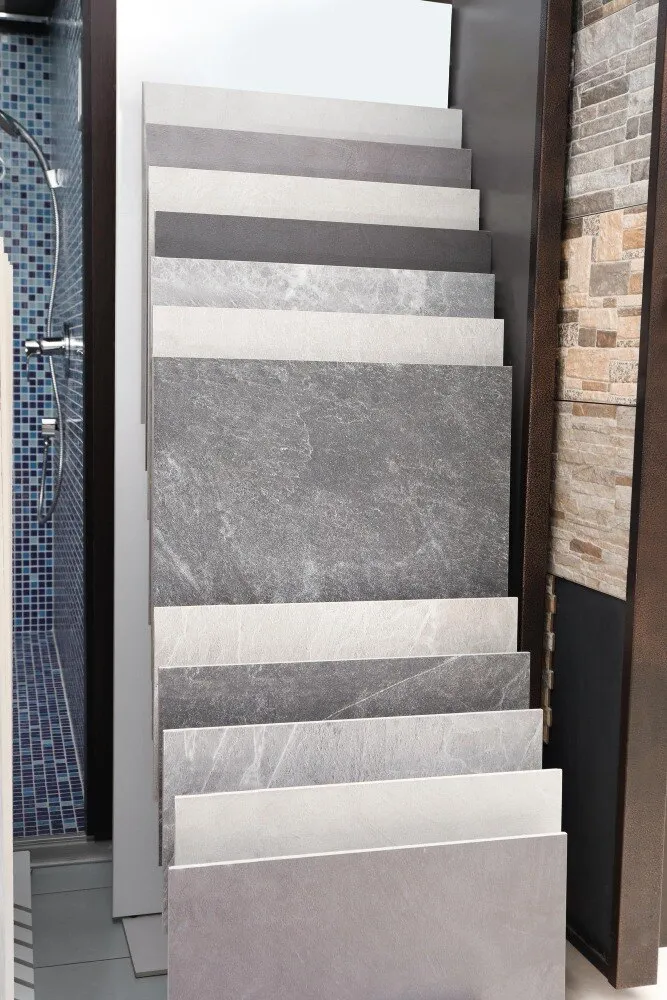
A showroom sample is not the production batch. State that acceptance depends on the approved product, shade, calibre, finish, and batch, and ask whether the sample is free, refundable, or chargeable. RK GRANITE can record these specifications and retained cartons on the order, giving you a reference for later repairs.
Related product
 | Tiles Tiles RK Granite offers an extensive range of premium tiles in Pune to elevate the style and functionality of your spaces. |
What Delivery and Receiving Terms Cover
“Free delivery within Pune” is meaningful only when the quotation defines the delivery zone and site conditions. Before you buy tiles in Pune, confirm the delivery address and pin code, vehicle access, delivery time window, and whether transport ends at the roadside, ground floor, or building entrance.
Unloading can cost extra when the vehicle cannot reach the site, cartons must be carried upstairs, no usable lift is available, or material must travel from the vehicle to a distant work area. Get separate charges for unloading, floor delivery, and carrying; “delivery included” does not automatically mean labour is included.
- Count every carton against the invoice or delivery challan before signing. Record shortages immediately.
- Inspect cartons for crushed corners, torn packaging, wetness, punctures, and broken straps. Photograph visible damage and the vehicle load.
- Check the label on each carton for the ordered product code, shade, calibre, size, and batch where stated. Open representative cartons to check for broken tiles, shade variation, or incorrect pieces.
- Write shortages, damage, or mismatched labels on the delivery receipt before signing, and keep photographs and a copy of the receipt.
Ask for the written claim procedure and notification deadline in the order documents. A dealer can reject a late transit-damage or shortage claim, and installing the tiles can make inspection and replacement disputes harder.
How Returns, Extras, and Project Releases Work
Get the return policy in writing before payment, especially from a tile dealer in Pune who is procuring a non-stock shade or size. Confirm whether opened cartons, cut pieces, special-order products, and project-specific material qualify for cancellation, return, restocking credit, or refund.
- Installation materials: ask whether adhesive, grout, spacers, trims, waterproofing, delivery, and laying labour are included or billed separately.
- Special orders: record the cancellation deadline, restocking charge, deposit treatment, and refund method before approving a non-stock order.
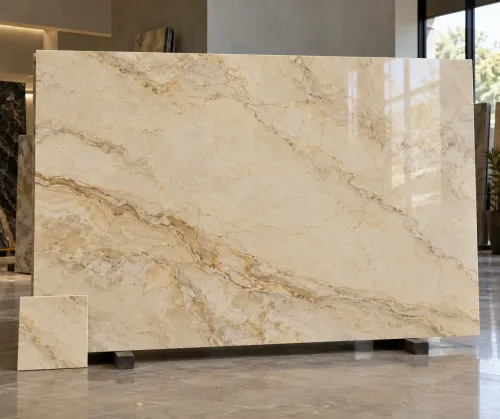
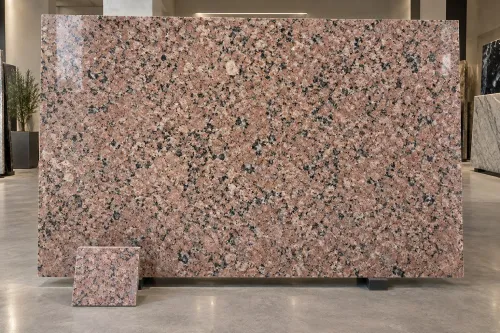
- Natural stone: confirm whether the price covers only slabs or tiles, or also selection, cutting, edge profiling, sink cut-outs, transport, polishing, sealing, wastage, and installation. Veining, fissures, colour variation, and resin repairs need written acceptance criteria.
- Sanitaryware: list every basin, closet, faucet, trap, waste coupling, flush mechanism, mirror, and accessory by model, colour, quantity, warranty, and installation scope. Check that a concealed cistern includes its compatible flush plate.
- Extra stock: budget 5–10% for straight layouts and 10–15% or more for diagonal, patterned, or heavily cut work. These are purchased cartons, not free extras.
For phased work, state the phase, release dates, reserved carton count, rate-validity period, and same-batch requirement on the purchase order. Retain cartons from that batch for repairs; later stock can differ in shade. For commercial orders, add the billing name, GSTIN, delivery address, and project reference.
Frequently asked questions
What does a standard tile purchase in Pune include?
It includes tiles in sealed manufacturer cartons, product packaging, and an invoice showing the product, quantity, taxable value, and GST. Confirm whether the quoted rate is per square foot, square metre, box, or piece.
How do I calculate the number of tile cartons I need?
Measure the total installation area, add an allowance for cuts and breakage, divide by the coverage printed on each carton, and round up to a full carton. Keep extra tiles from the same batch for future repairs.
What details must a tile quotation and invoice identify?
Check the product name, size, finish, colour, shade, calibre, batch or lot number, quantity, rate unit, taxable value, GST rate and amount, delivery charges, and final total.
What should I check when tile cartons are delivered?
Count cartons, inspect seals and packaging, compare shade, calibre, batch numbers, and product details with the order, then record shortages or visible damage on the delivery document before accepting them.
Keywords