


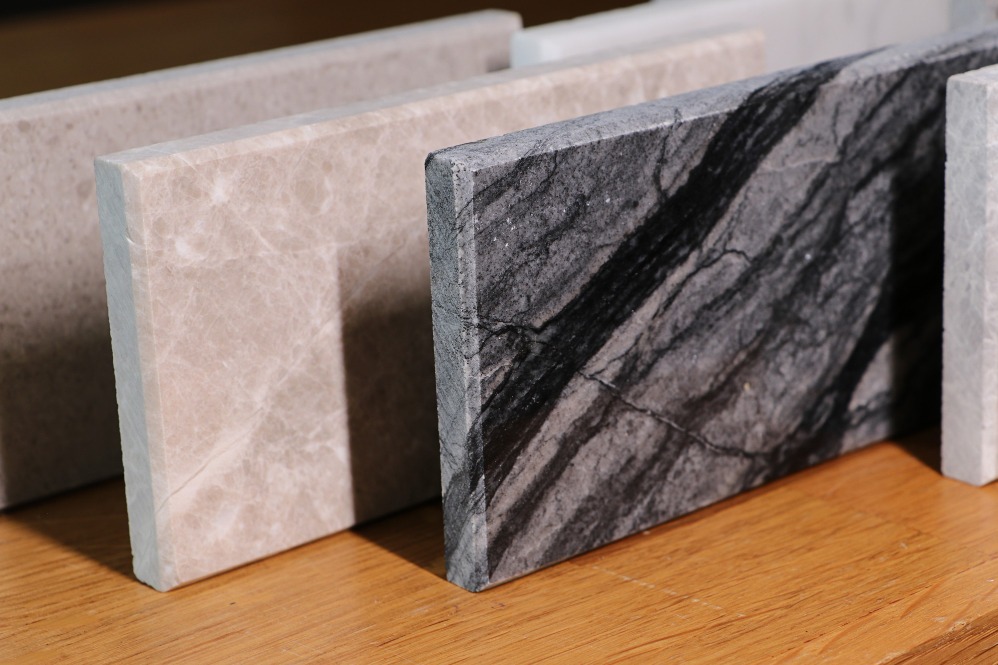
Natural stone selection becomes much easier when you understand what you are actually looking at. Granite Slabs are not factory-produced sheets with perfectly repeated colours and patterns. They are sections of natural stone, and variations are part of their identity.
For homeowners, designers, architects, and construction professionals in Pune, knowing how to inspect and plan slabs can improve both material selection and the finished installation.
Why Slab Size Matters
Slab dimensions influence how many joints may appear in the finished surface.
A larger slab may allow a long countertop, reception desk, wall panel, or other feature to be fabricated with fewer visible joints. However, large slabs also create transportation and handling considerations.
The usable area matters more than the nominal dimensions because edges or certain natural characteristics may affect cutting layouts.
Thickness Should Match the Requirement
Granite is available in different thicknesses depending on variety, processing, and supplier inventory.
Rather than assuming thicker always means better, discuss the intended application with the supplier and fabricator.
Countertops, flooring, staircases, wall applications, and architectural elements can have different structural and installation requirements.
Natural Variation Is Normal
One of granite's strongest visual characteristics is that no two natural slabs are necessarily identical.
Variation can appear in:
- Colour
- Grain size
- Veining
- Mineral deposits
- Pattern direction
- Tonal intensity
This can be an advantage when natural character is desired, but it requires planning when several slabs will appear next to one another.
Understand Fissures and Cracks
Natural stone may contain fissures formed during geological processes. These should not automatically be confused with structural cracks.
However, buyers should inspect slabs carefully and discuss any visible lines, repaired areas, mesh reinforcement, or resin treatment with the supplier.
For critical fabrication areas, the fabricator should understand the slab before cutting begins.
Match Slabs for Larger Areas
Suppose a Pune villa requires granite flooring across a large living area, or a commercial reception needs several adjacent stone panels. Selecting pieces independently can result in abrupt pattern or colour changes.
For multi-slab applications, inspect the slabs together and determine their sequence before fabrication.
Designers sometimes deliberately use variation to create movement. In other projects, closer matching is preferred.
Both approaches can work when they are planned.
Calculate Wastage Realistically
Raw slab area does not translate directly into finished usable area.
Wastage may occur because of:
- Cut-outs
- Irregular room dimensions
- Pattern alignment
- Damaged edges
- Required joint positions
- Staircase dimensions
- Grain or vein orientation
A detailed cutting plan can help determine how efficiently the material can be used.
Consider Handling at the Site
Large natural stone pieces require careful transportation and handling.
For apartment projects, check lift and staircase access. For construction sites, identify unloading and storage arrangements before delivery.
Slabs should be handled and stored using appropriate practices to reduce avoidable damage.
Compare the Complete Lot Before Ordering
When purchasing several slabs, confirm whether enough pieces of the selected material are currently available. Waiting to purchase additional slabs later may introduce colour or pattern differences because the next stock could originate from another block or batch.
This is particularly relevant to larger projects in Pune and other parts of Maharashtra where material procurement must coordinate with construction schedules.
RK Granite works with residential and professional buyers assessing granite and related materials for different project applications.
The best way to buy Granite Slabs is to think beyond the name or colour of the stone. Evaluate dimensions, thickness, natural variation, available quantity, cutting requirements, and site access together. These practical checks make it much easier to turn raw stone into a finished surface that looks intentional.


