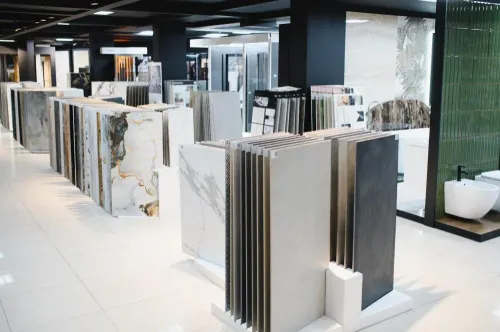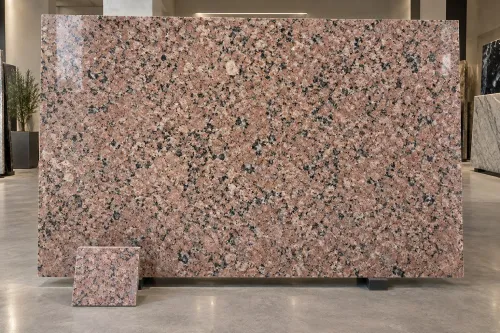


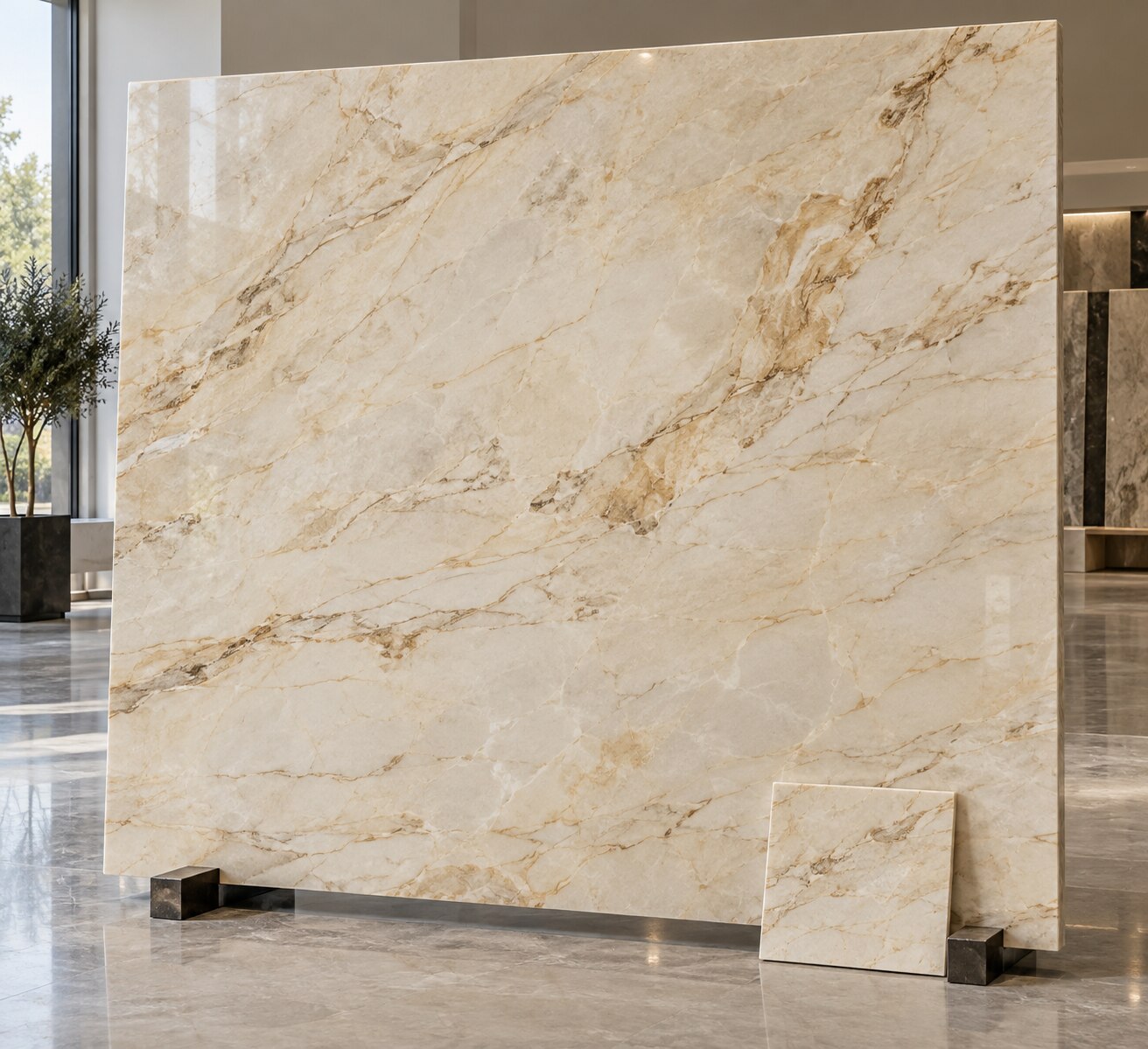
A usable project rate for Agaria marble is not a single Pune market number: the trade name covers varying blocks, thicknesses, finishes and slab quality. By separating landed material cost from fabrication and installation, then pricing usable yield instead of headline square footage, you can prepare a defensible estimate and approve the right lot.
Key takeaways
- Budget ₹150–₹350 per sq ft for ordinary polished 16–18 mm slabs.
- Add cutting waste, edge work, transport, installation, and GST to the estimate.
- Compare slab thickness, whiteness, veining, cracks, repairs, and usable yield.
- Choose a safer surface for areas exposed to acids, stains, or heavy abrasion.
What should architects budget for Agaria marble in Pune?
Plan on ₹150–₹350 per sq ft for ordinary polished 16–18 mm slabs, and ₹350–₹600-plus per sq ft for highly selected, whiter or heavily veined material. These are indicative planning bands for agaria marble price in Pune, not fixed commodity rates.
Agaria, Agariya, Agaria White and White Agaria can refer to different Rajasthan blocks. Record the quarry belt, block number, shade, actual slab photographs, thickness and finish on the quotation; otherwise a cheaper-looking quote may describe a different product.
Compare the ex-yard Rajasthan rate with the landed Pune cost. Add freight, unloading and local handling before approving the material budget.
Require these lines separately:
- Material, GST, transport, cutting, polishing, edge work, installation, sealing and wastage.
- Thickness and finish: polished 16–18 mm is not equivalent to honed, 20–25 mm, resin-filled or mesh-backed material.
- Gross slab area or saleable area: a per-square-foot rate is meaningless until the supplier states which measurement applies.
- Invoice classification and the current CBIC GST rate: do not assume 18% from an informal quotation.
Ask who bears replacement cost for transit damage, unusable fissures and shade mismatch. Approve the lot only after checking the quoted area basis, because a low ex-yard price can become expensive after freight, poor yield, fabrication and rejected slabs.
How do you turn a measured area into a project estimate?
Measure every finished surface separately, then price the area you can actually install—not the area printed on a slab invoice.
- Record floors, walls, stair treads, risers, counters and vanities as separate line items.
- Add each finished net area to obtain the project total.
- Add 10–15% for straightforward flooring or cladding. Increase the allowance for book-matching, diagonal layouts, stairs, narrow corridors and complex cut-outs.
- Record each slab’s nominal area as length × width. Deduct cracks, resin-heavy zones, edge damage, required cuts and layout losses to find usable area.
For Agaria marble slabs in Pune, compare the purchase area with the net installed area:
| Option | Purchase calculation | Effective material cost |
|---|---|---|
| Cheaper slab | 12 slabs × ₹24,000 = ₹2,88,000; 100 usable sq ft per slab | ₹288 per usable sq ft |
| Better-yield slab | 10 slabs × ₹28,000 = ₹2,80,000; 114 usable sq ft per slab | About ₹245 per usable sq ft |
The second slab costs more per nominal square foot but less per installed square foot. Calculate effective material cost as total material spend divided by usable installed square feet.
Keep fabrication separate: cutting, sink openings, mitres, polishing and edge profiles. List installation separately for adhesive or mortar, levelling, joints, site polishing and sealing.
Before comparing suppliers, write the wastage percentage into the quotation and assign responsibility for replacement if breakage, unusable defects or short supply pushes the requirement higher.
Which slab details change the price and usable yield?
Approve a full slab lot, not a small showroom sample. Record the actual dimensions and inspect each slab because white stone can vary in background tone, grey veining, pinholes, open veins and resin-filled fissures, even within one block.
- Check full slab length and width, actual thickness and thickness consistency.
- Identify polished or honed finish, vein continuity and background tone.
- Inspect pinholes, open veins, resin-filled fissures and mesh backing.
- Check bowing, corner damage, edge repairs and underside resin.
A 16–18 mm polished slab, a 20–25 mm slab, a honed surface, a resin-filled slab and a mesh-backed slab are different products for pricing and fabrication. Their cutting behaviour, edge treatment and repair options are not interchangeable.
Agaria marble suppliers in pune should state whether the quotation uses gross slab area or saleable area, and whether matching slabs are available from the same block or lot.
| Option | Background and veins | Repairability and maintenance | Availability and budget position |
|---|---|---|---|
| Agaria | Variable white tone with distinctive grey veins | Repairable, but resin and open fissures affect cutting; needs marble care | Lot-dependent, with broad budget variation |
| Indian Statuario | Often whiter and more controlled in appearance | Similar marble maintenance; vein continuity drives yield | Selected material can sit higher |
| Aspur | Variable background and vein movement | Requires crack and fissure inspection | Availability depends on block and lot |
| Kumari | Natural variation in tone and veining | Needs sealing and careful cleaning | Compare actual slabs, not names |
| Engineered quartz | More consistent background and pattern | Easier routine maintenance; limited repair after major damage | Predictable budget, but not natural-stone character |
Approve the lot only after testing the planned cutting pattern against actual slab dimensions and excluding cracks, heavy resin zones, edge damage and unusable vein placement. Use effective installed cost, not the lowest square-foot quote.
How should you inspect a Pune supplier’s lot before purchase?
Inspect every full slab in raking light before you approve the lot. A small showroom sample cannot reveal changes in tone, grey veining, pinholes or resin-filled fissures across Agaria marble slabs.
- Compare the displayed sample with the actual supplied lot.
- Photograph both faces, all edges and each corner.
- Record every slab number, length, width and thickness.
- Check cracks, open veins, resin-filled fissures, pinholes, patches, shade variation and corner repairs.
- Inspect the underside for mesh, resin and repaired areas.
- Place a straightedge across each slab to identify bowing, then take thickness readings at several points to detect inconsistent fabrication allowance.
- Request available water-absorption or porosity information before purchase.
For architects comparing agaria marble suppliers in Pune, stock location changes the inspection and delivery risk:
| Option | Practical advantage | Contract risk to address |
|---|---|---|
| Local Pune stock | Inspect the full lot and arrange shorter handling | Confirm the inspected slab numbers will be supplied |
| Rajasthan dispatch | Access to more blocks and selections | Specify transit damage, unloading, shade mismatch and short supply |
If you want to buy agaria marble in Pune, obtain written approval of the sample and actual lot. The purchase order must state replacement terms for concealed cracks, transit breakage, non-matching slabs and shortages; reject “subject to availability” as the only protection.
When considering RK GRANITE, compare whether it can show the actual lot, identify slab numbers and issue an itemised quotation, not merely offer a generic showroom promise.
Related product
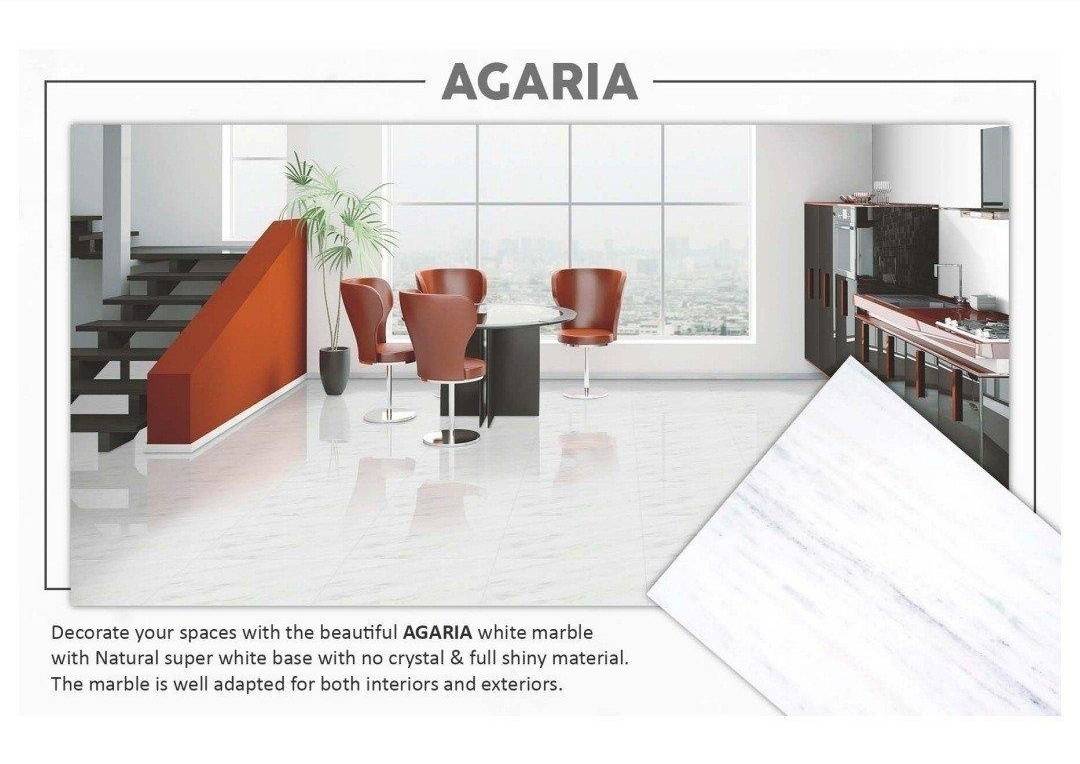 | Marble Agaria RK Granite presents premium-quality Agaria Marble in Pune, highly valued for its elegant white base with fine grey veins that add a natural and... |
Where is Agaria suitable, and when is another surface safer?
Agaria suits low-to-moderate traffic interiors when the layout, substrate, joints and edge profile are properly detailed.
- Flooring in homes, offices and reception areas
- Feature walls and reception backdrops
- Staircases with protected edges
- Vanity tops
- Selected interior counters away from heavy abrasion and acidic spills
Kitchen counters need caution: marble scratches, stains and etches, so a heavy-use, low-maintenance kitchen is a safer match for engineered quartz or another resistant surface. If you plan to buy agaria marble in Pune, compare the maintenance burden with the quoted slab rate.
Shower areas require falls towards the drain, tested waterproofing, compatible adhesive, sealed joints and ventilation. Poor detailing traps water behind the stone and can cause staining or debonding.
Exterior use requires a project-specific stone, anchoring, drainage and weathering specification. Do not assume an indoor Agaria slab is suitable for an exposed façade.
Specify a compatible penetrating sealer and pH-neutral cleaner. Remove lemon, vinegar, acidic cleaners, coloured liquids and bathroom chemicals promptly; sealing reduces staining but does not make calcium-carbonate marble acid-proof.
Handover documents must identify the sealer, cleaning method, resealing review interval and spill response. Choose another surface for uniform-colour schemes, large uninterrupted areas requiring tight matching, or façades without a tested installation system. Judge the decision by lifecycle cost, not only the quoted slab rate.
Frequently asked questions
What should architects budget for Agaria marble in Pune?
Use ₹150–₹350 per sq ft for ordinary polished 16–18 mm slabs. Highly selected, whiter, or heavily veined material can cost ₹350–₹600-plus per sq ft. Treat these as planning bands, not fixed rates.
How do you turn a measured area into an Agaria marble project estimate?
Multiply the measured finished area by the selected rate, then add allowance for slab waste, cutting, edge profiles, transport, installation, polishing, GST, and other specified work. Base the calculation on usable slab area rather than only the room measurement.
Which Agaria slab details change price and usable yield?
Thickness, slab dimensions, whiteness, vein pattern, surface finish, cracks, filled fissures, repairs, and edge damage affect price and yield. A large slab with consistent material can reduce joins and cutting waste, while defects reduce the area you can safely use.
How should architects inspect a Pune supplier’s Agaria lot before purchase?
Inspect the full lot in daylight or neutral white light, check thickness and dimensions, look for cracks, resin-filled fissures, patch repairs, stains, warping, and edge damage, and confirm the batch, quantity, finish, and agreed rate in writing.
Where is Agaria suitable, and when is another surface safer?
Agaria suits interior floors, walls, counters, vanity tops, and feature areas when the design accepts natural variation and routine sealing. Choose another surface for locations exposed to strong acids, abrasive traffic, persistent standing water, or demanding stain resistance.