


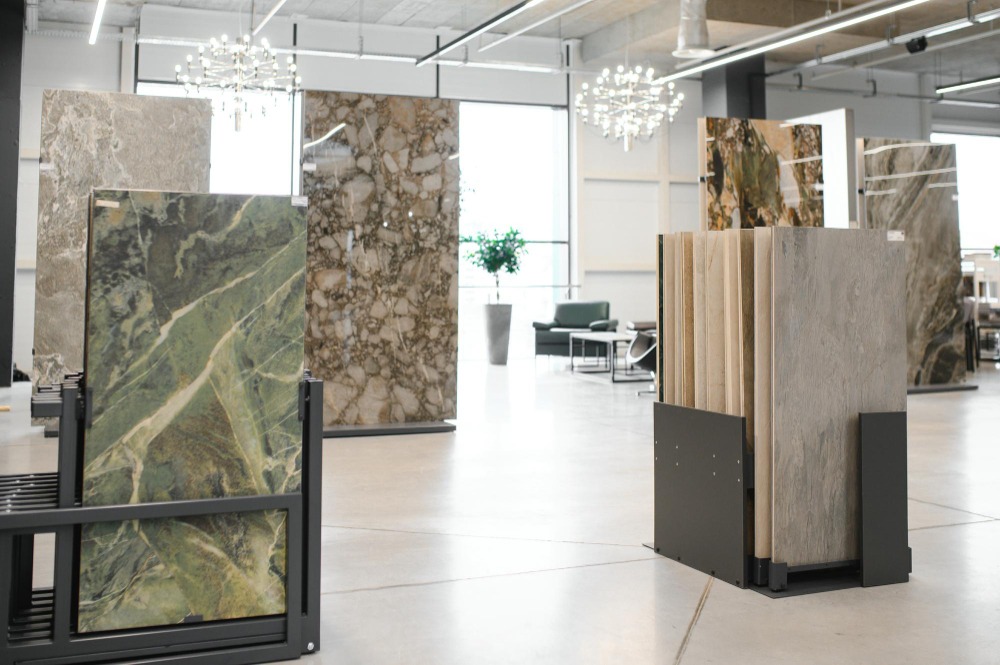
Visiting a Granite Showroom is very different from selecting paint, laminate, or another manufactured finish from a catalogue. Granite is a natural material, which means every slab can have its own pattern, mineral distribution, veins, and subtle colour variations.
For buyers in Pune, seeing full-size slabs before purchasing can therefore prevent many common selection mistakes.
Go With Basic Project Information
Before entering a showroom, know what you are trying to cover.
Useful details include:
- Approximate area
- Intended application
- Preferred colour family
- Interior design style
- Cabinet or furniture colours
- Indoor or outdoor use
- Approximate budget range
- Required completion schedule
For kitchen projects, carrying a cabinet laminate or colour sample can be particularly useful. Interior designers may also bring flooring, wall finish, or furniture references.
Observe Full Slabs From a Distance
Standing too close to a granite slab makes it difficult to understand its overall character.
Take several steps back.
This reveals whether the pattern is subtle, highly directional, uniform, dramatic, or visually busy. A pattern that looks attractive in a small section may create a completely different effect across a large countertop or floor.
Then move closer to inspect the surface.
Check More Than Colour
Colour tends to attract the most attention, but several other characteristics deserve consideration.
Inspect:
- Thickness
- Surface flatness
- Polish
- Natural fissures
- Edge condition
- Shade variation
- Vein direction
- Mineral pattern
- Available slab sizes
Some natural markings are inherent characteristics of stone rather than defects. The key is understanding what you are purchasing and where important patterns will appear after cutting.
Compare Slabs From the Same Lot
If your project requires several slabs, do not assume every piece carrying the same stone name will look identical.
Granite can vary between blocks and batches.
For large kitchens, flooring projects, staircases, commercial counters, or multi-unit developments, compare the required slabs together whenever possible. This helps architects and contractors plan transitions and maintain better visual continuity.
Think About Lighting
Pune homes can have very different lighting conditions depending on orientation, window size, floor level, and interior layout.
Dark granite in a brightly lit showroom may appear considerably deeper in a kitchen with limited daylight. Conversely, lighter stone can help visually open smaller spaces.
Try viewing the material under more than one lighting condition when the showroom setup allows it.
Ask About Availability Before Finalising
Finding the right stone is only useful when sufficient quantity is available.
Confirm:
- Number of available slabs
- Approximate dimensions
- Whether slabs belong to the same lot
- Current stock status
- Possibility of reserving selected material
- Lead time for additional quantities
This becomes especially important for builders, contractors, and designers working to project schedules.
Plan Fabrication Before Purchasing
Granite must normally be cut and fabricated according to the final application.
Kitchen projects may require sink and hob cut-outs. Staircases need accurate tread and riser dimensions. Countertops may require edge profiles, joints, or backsplashes.
Discuss these measurements with the fabricator before determining the final quantity.
Use the Showroom Visit to Compare Materials Properly
A showroom should be more than a place to identify the lowest price. It is an opportunity to understand how different natural stones actually look and behave.
At RK Granite, customers in Pune can evaluate material options according to the practical needs of homes, interiors, architectural projects, and construction work.
Bring measurements, compare full slabs, examine multiple pieces where necessary, and consider the finished installation rather than the raw stone alone. A thoughtful showroom visit can eliminate uncertainty and make the final material decision far more informed.